Queue Management System in Karachi: A Practical 2026 Guide
Karachi never slows down, and neither do its queues. Whether you manage a hospital outpatient desk in Gulshan, a bank branch on I.I. Chundrigar Road, or a utility bill centre in North Nazimabad, a queue management system in karachi can turn a stressful crowd into an orderly, measurable flow.
This guide explains how the technology works, what suits Karachi’s conditions, and how to roll it out without disrupting daily service. It is aimed at managers who want clear steps, not jargon.
The Karachi Queue Problem in Plain Terms
Karachi is Pakistan’s largest city, with a population well above 15 million. Service points face heavy footfall, long commutes, and unpredictable peaks around salary days, month-end billing, and school admissions.
Conditions that make queues harder here include:
- Power interruptions. Load-shedding can take down screens and kiosks unless backup is planned.
- Summer heat. Long waits outdoors are unpleasant and sometimes unsafe.
- Language mix. Urdu, English, Sindhi, and Pashto speakers often share one waiting room.
- Informal line-jumping. Without a visible ticket order, disputes happen daily.
How Digital Tickets Create Fairness
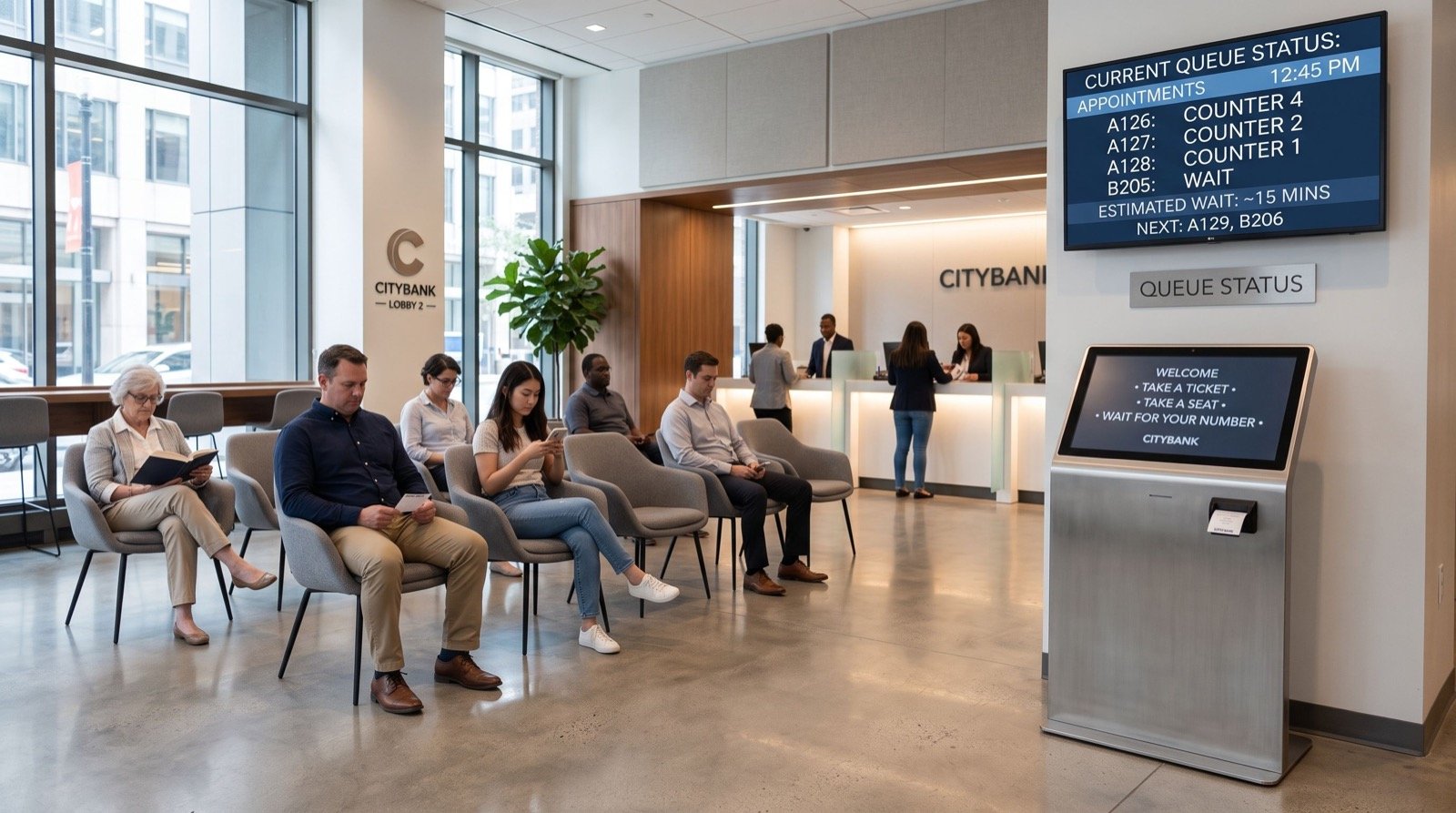
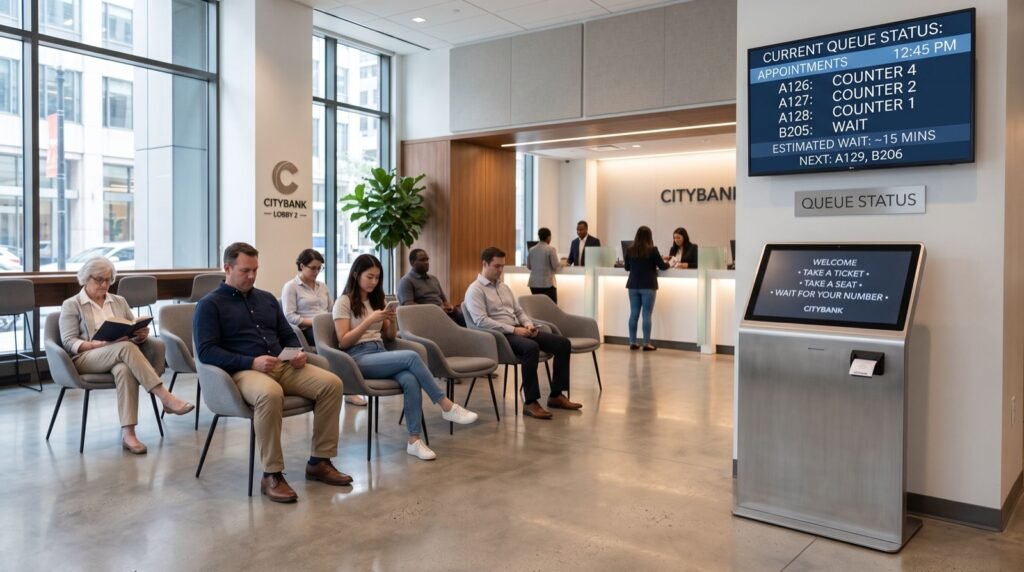
The core idea is simple. Each visitor receives a number. A screen and voice announcement call that number to a counter. Everyone can see the order, so arguments fade.
Staff gain too. Instead of managing tension at the door, they see a console showing who is next, how long they have waited, and which service they need.
Ticket options to consider
- Touch kiosk. Best for large branches with steady walk-in traffic.
- Receptionist printing. Cheap and good for clinics with low volumes.
- QR or SMS ticket. Lets customers wait elsewhere and return when close to their turn.
- Online appointments. Ideal for planned visits such as licence renewals or consultations.
Matching the System to Your Karachi Site
| Site | Typical peak | Suggested setup | Priority feature |
|---|---|---|---|
| Private hospital OPD | 9am to 12pm | Kiosk plus doctor-wise queues | Urdu voice calling |
| Bank branch | Month-end, Fridays | Kiosk with VIP lane | Service-type routing |
| Utility or telecom centre | Bill due dates | Kiosk plus SMS | Real-time dashboards |
| Passport or ID office | All day | Appointment plus walk-in | Priority for seniors |
Power and Connectivity: Plan for Reality
Many deployments fail not on software but on infrastructure. In Karachi, ask every vendor three direct questions.
- Does the kiosk have a battery or UPS so ticketing continues during an outage?
- Can the counter software run on the local network if the internet drops?
- How quickly can an engineer reach my area if something fails?
A small UPS and a local server cost little compared with a morning of dead screens and angry customers.
What Is the Difference Between Local and National Solutions?
A branch-level system serves one site. A national or multi-city platform links many branches under a single dashboard. If you operate across Pakistan, a broader queue management system lets head office compare Karachi, Lahore, and Islamabad performance in one view.
For a single clinic, the simpler option is usually enough. Grow only when your reporting needs demand it.
Measuring Success After Launch
Pick four numbers and write them down before installation:
- Average waiting time per visitor.
- Percentage of visitors who leave without being served.
- Average service time per counter.
- Customer rating, even a simple three-face feedback button.
Check them again after 30 and 90 days. One Karachi-style insight worth testing: add a temporary extra counter during the last three working days of the month. The reports usually show the gain clearly enough to justify permanent staffing changes.
Staff buy-in matters
Some employees fear that tracking exposes them. Explain from day one that the goal is balancing workload, not punishing slow desks. Share the dashboards openly and celebrate improvements together.
Data and Privacy Considerations
If your system collects phone numbers for SMS alerts, store them securely and use them only for queue notifications. Pakistan’s digital policy bodies, including the Pakistan Telecommunication Authority, publish rules about messaging and consumer protection that are worth reading before you start bulk SMS.
Choosing Local Support
Installation, training, and after-sales response decide whether you love or regret a system. Ask neighbours and similar businesses who they used, and look for reliable local experts with proven projects in your sector. A vendor who answers the phone on a Saturday is worth more than a slightly cheaper quote.
A Sample Rollout Plan for a Karachi Branch
Here is a realistic two-week plan that avoids disrupting daily service. It assumes a branch with six counters and about 400 visitors a day.
- Days 1 to 3: survey the floor, mark kiosk and screen positions, and check power points and network drops.
- Days 4 to 6: install hardware after hours, including the UPS, and configure service categories in Urdu and English.
- Days 7 to 9: train counter staff in small groups and run a dry test with colleagues acting as customers.
- Days 10 to 12: soft launch with two service types while a greeter helps visitors use the kiosk.
- Days 13 to 14: switch on every service and review the first reports with the branch manager.
The greeter trick
For the first fortnight, place a friendly staff member beside the kiosk. Many visitors, especially older customers, hesitate to touch a screen. A greeter who says “please press this button” builds confidence quickly, and within days regular visitors need no help at all.
Also post a short sign in Urdu and English explaining how to take a ticket and what the numbers mean. Clear signage costs almost nothing and removes most of the first-week confusion.
Frequently Asked Questions
How much does a queue management system cost in Karachi?
Prices vary widely by counters, kiosks, and screens. A small clinic can start modestly, while a large bank branch needs a bigger budget. Request itemised quotes to compare fairly.
Will it work during load-shedding?
Yes, if the hardware includes UPS backup and the software supports local operation. Confirm this in writing before buying.
Can it announce numbers in Urdu?
Quality systems support Urdu voice calling and bilingual displays, which is essential for most Karachi sites.
How long does installation take?
A single branch is often operational within one to two weeks, including staff training.
Conclusion: Bring Order to the Busiest City
A well chosen queue management system in Karachi gives customers fairness, gives staff clarity, and gives managers data. Plan for power cuts, support Urdu, track four simple metrics, and pilot at one branch first. Contact two or three vendors this month for a live demonstration in 2026 and see the difference for yourself.