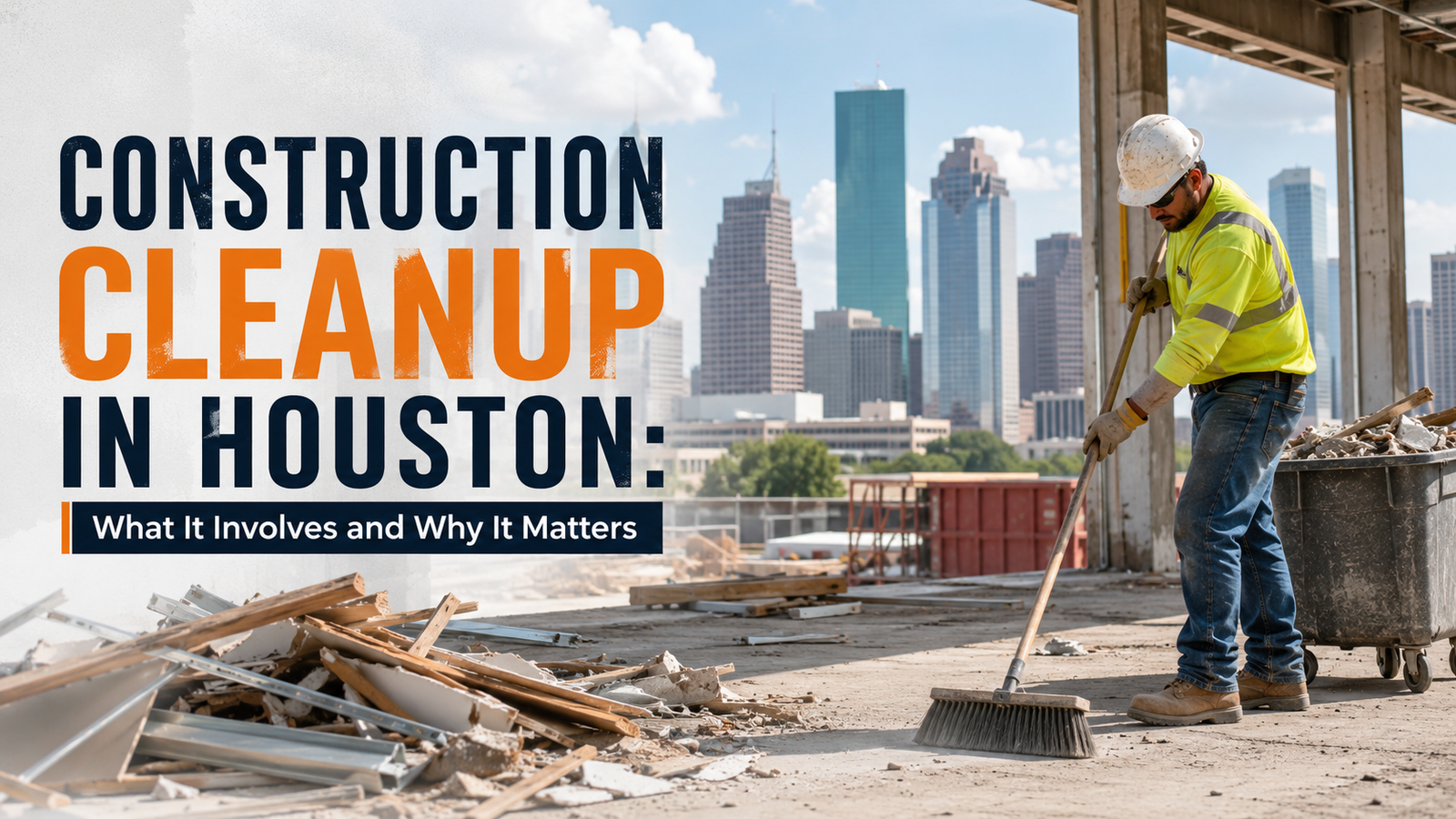

Every construction project in Houston generates waste. From the framing lumber ends and drywall scraps of a new residential build to the concrete rubble and steel scrap of a commercial project, construction activity produces material byproducts that must be systematically managed and removed from the site. Construction Cleanup Houston the professional collection, sorting, removal, and disposal of construction waste is an essential supporting service that keeps active job sites safe, efficient, and compliant with Houston’s waste management requirements.
What Is Construction Cleanup?
Construction cleanup refers to the collection, segregation, loading, and disposal of waste materials generated during building construction, renovation, or demolition activity. It is distinct from post-construction final cleaning (which prepares a completed building for occupancy) and from ongoing site housekeeping (a continuous daily responsibility of the construction crew). Construction cleanup specifically addresses the accumulation and removal of debris discarded materials, packaging, cut-offs, and non-reusable waste that would otherwise impede construction operations or create safety hazards.
In Houston’s active construction market where residential building, commercial development, infrastructure work, and industrial construction all proceed at high volumes construction cleanup is a significant service sector. Major projects generate substantial debris volumes requiring organized, scheduled removal to prevent accumulation from becoming a project management problem.
Types of Construction Debris in Houston Projects
Wood waste is typically the highest-volume debris category on residential construction projects in Houston. Framing lumber generates significant cut-offs and scrap during rough carpentry. Engineered wood products OSB, plywood, LVL similarly produce waste at cutting stations. Wood that has been wetted by Houston’s frequent rain events and cannot be used in the structure must also be removed.
Packaging and wrapping material represents a significant and often underappreciated debris category. Modern construction materials arrive wrapped in plastic, cardboard, foam, and metal banding. A single framing package, insulation delivery, or window order generates substantial packaging waste. Mechanical, electrical, and plumbing waste includes conduit cuttings, wire and cable off-cuts, plastic piping scraps, HVAC duct remnants, and insulation material accumulating steadily through the mechanical rough-in and trim phases.
Construction Cleanup Scheduling and Site Safety
Effective construction cleanup is a scheduled, ongoing process integrated into the construction timeline not a single end-of-project event. Debris allowed to accumulate on active construction sites creates multiple safety hazards: tripping and falling risks for workers, fire hazards from accumulated combustible scrap, impaired emergency egress, and obstructions that slow material handling. OSHA construction safety standards specifically require housekeeping and waste management as part of a safe work environment.
Houston’s weather creates particular urgency around cleanup scheduling. The region’s frequent and intense rainfall events can rapidly scatter loose debris, drive it into storm drains, and create water quality and drainage impacts. Construction cleanup scheduling in Houston accounts for this risk, with debris contained and protected during periods of anticipated rain. Cleanup events are typically organized around construction phase completions: after rough framing, after MEP rough-in, after drywall, and at the completion of each major subcontract phase.
Debris Sorting and Recycling in Houston
Houston’s construction cleanup market has evolved toward increased debris sorting and recycling. Separating recyclable materials clean wood, metal, concrete, cardboard from general waste reduces landfill disposal costs. Clean wood scrap has value as mulch feedstock. Metal cut-offs have significant recycling value through Houston’s active scrap metal market. Concrete and masonry waste can be processed into recycled aggregate. The City of Houston and Harris County both have waste management regulations that govern construction debris disposal.
Common Questions About Construction Cleanup in Houston
Is construction cleanup the same as post-construction cleaning? No. Construction cleanup addresses debris removal from the active construction site during the building process. Post-construction cleaning is the detailed cleaning of completed spaces in preparation for occupancy or inspection. Both are needed for a complete project, but they are distinct services.
Who is responsible for construction cleanup on a Houston construction project? General contractors typically take overall responsibility for site housekeeping and debris management. Many projects engage a dedicated construction cleanup service to ensure consistent, scheduled debris removal independent of subcontractor responsibilities.